
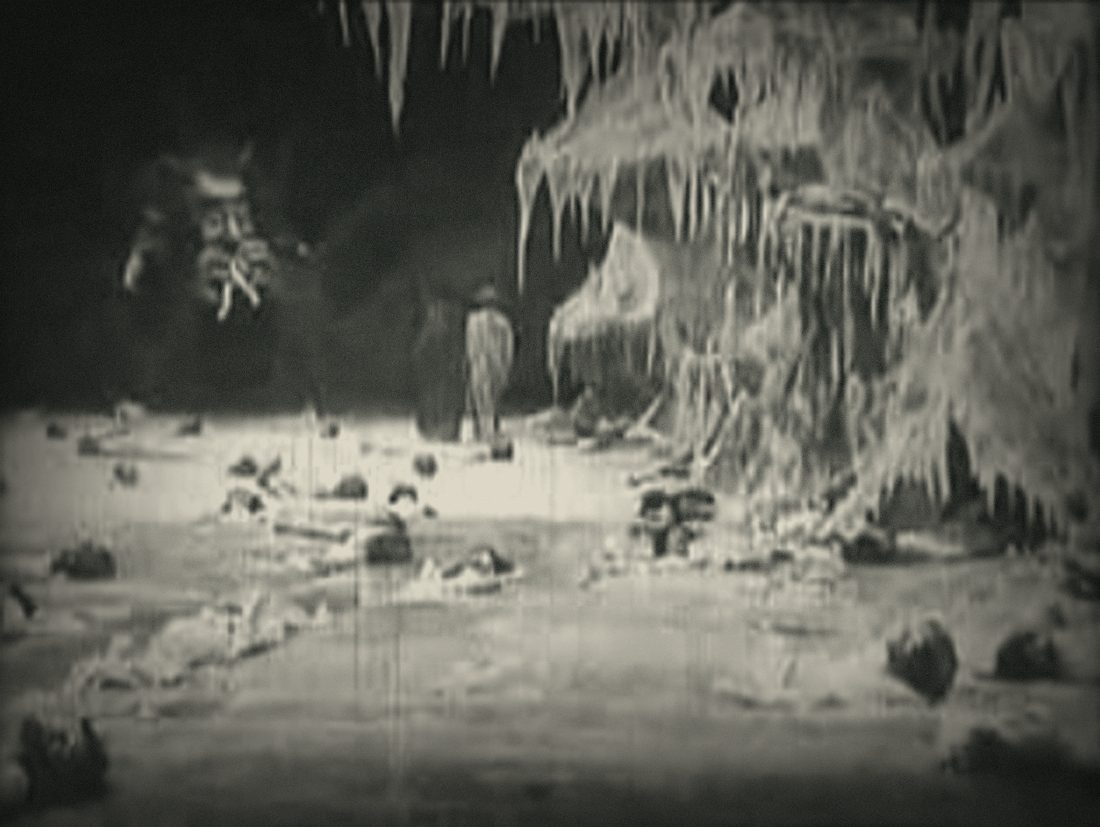
Cinema was sixteen years old and barely out of the fairground tent when Milano Films decided the medium was ready for the underworld. Three directors, Francesco Bertolini, Adolfo Padovan and Giuseppe De Liguoro, spent close to three years and a reported hundred thousand lire dragging cameras through papier-mache circles of Hell. The result, L'Inferno, premiered in Naples on March 10, 1911: seventy-three minutes long in an era when films ran ten. It is generally counted as Italy's first feature film. The first feature-length expedition in movie history, in other words, went straight down.
The filmmakers worked from the Gustave Dore engravings that every literate household already knew, and staged them as living tableaux: the naked damned herded across volcanic scrubland, Ugolino gnawing on the archbishop's skull, Lucifer working through sinners like a man eating chicken. Contemporary critics reached for words like "excessive". Audiences reached for their wallets. In the United States alone the film took over two million dollars, and exhibitors used its length as official justification for raising ticket prices. Hell, it turns out, priced itself as a premium product from day one.
It also got scooped. While Milano Films ran a publicity campaign a full year ahead of release, the smaller Helios Film shot a rival Inferno in a hurry, under twenty minutes for eight thousand lire, and rushed it into theaters in January 1911, three months early, riding a wave of anticipation its competitor had paid for. The first great film in history was also the victim of the first great knock-off race. This newsroom chooses to find that beautiful.
The damnation business has aged well. The Cineteca di Bologna restored the film for its centenary in 2011, and a 4K restoration reached Blu-ray in 2023. Hell has never looked cleaner.
One hundred and fifteen years later, the precedent stands, and this desk respects it: if you must go to hell, bring a camera.